
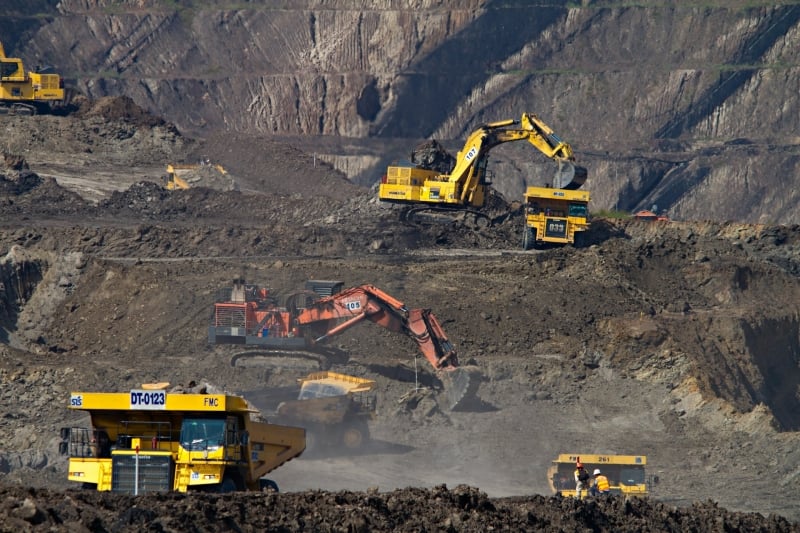
Sun Lee || Indonesia’s most ambitious project, the Kalimantan Industrial Park Indonesia (KIPI), has a darker side of Chinese investment in it. While the project is touted as a beacon of green industrial development in Southeast Asia, symbolizing Indonesia’s commitment to sustainable growth, it has also raised significant concerns among locals, environmentalists, and experts. Despite Indonesian President Joko Widodo (Jokowi) hailing KIPI as “the largest green industrial area in the world,” a complex narrative of resource exploitation, environmental degradation, and social upheaval, largely driven by Chinese investments, is unfolding.
KIPI is seen as a key project for Chinese-Indonesian relations, and it was specifically mentioned in a joint statement on deepening comprehensive strategic cooperation following Widodo’s meeting with Chinese President Xi Jinping in Beijing last year. China’s involvement in KIPI is part of a broader strategy to secure access to Indonesia’s rich natural resources, particularly within the context of the Belt and Road Initiative (BRI). Chinese companies, including Tsingshan Holding Group and Taikun Petrochemical, have heavily invested in the project, providing the financial muscle needed to push it forward. However, this influx of Chinese capital has led to growing concerns about economic domination and the erosion of local sovereignty.
According to a report by the South China Morning Post (SCMP), resentment has grown among locals due to the increasing influence of Chinese interests over their own. Many locals have complained that the project and its workers are being prioritized over their rights. The Nugal Institute, a think tank that has been collecting data on the project, confirmed that Tsingshan Holding Group and Taikun Petrochemical are involved in KIPI, along with two Chinese contractors, China State Construction Engineering Corporation and China Railway Engineering Consulting Group. MerahJohansyah, a coordinator of research and management at Nugal, stated that KIPI needed to be audited due to a lack of transparency. He cited several workers’ rights issues, including the absence of proper contracts, leaving local laborers vulnerable to underpayment and summary layoffs. The institute has called for an audit to explain how Chinese workers can freely enter Indonesia and receive higher pay, while local laborers lack formal contracts. Although there is no official data on the number of Chinese workers at KIPI, locals estimate that there are already hundreds on-site.
The situation is further exacerbated by the opaque and coercive practices employed by many of the Chinese companies involved in KIPI. Local residents have reported instances of illegal land seizures, with some being forced to sell their land at prices far below market value under the threat of legal action. Activists from the Sustainable Forest Circle Association have documented cases where companies placed spies in communities to intimidate and silence dissent. These practices highlight the darker side of Chinese investments in Indonesia, where economic gain is pursued at the expense of human rights and environmental integrity.
Yosran Efendi, campaign manager at the Sustainable Forest Circle Association, noted that locals who refused to give up their land were too afraid to approach the police or courts due to intimidation from the companies. Reports from Indonesia indicate that the government has received numerous accusations of human rights violations related to National Strategic Projects like KIPI. In June, Komnas HAM documented at least 1,675 cases of human rights abuses over the past three years, mainly involving land disputes and environmental damage.
There is also widespread resentment among locals over what they perceive as preferential treatment for Chinese workers. For instance, a former fisherman expressed frustration that locals are being forced to learn Chinese, rather than the Chinese learning the local language in Indonesia. This sentiment reflects a broader unease among Indonesians about the growing influence of Chinese workers and companies in their country.
Despite being marketed as a green initiative, KIPI is heavily dependent on coal – a fossil fuel notorious for its environmental impact. Surprisingly, China has remained silent on this issue, likely because it still relies heavily on coal for its own power needs. This silence speaks volumes about where China’s interests lie; it appears to be less concerned about the global environment and more focused on securing resources. As reported by Bloomberg, a 1.06-gigawatt coal-fired power plant is being constructed to power the $2 billion Adaro Minerals Indonesia aluminium smelter within KIPI, which is set to begin operations in 2025. This reliance on coal contradicts the very essence of a “green” industrial park and exposes the project as a prime example of greenwashing, where environmental benefits are grossly overstated to cover up underlying ecological harm.
The environmental impact of KIPI extends beyond its dependency on coal. According to a report by JATAM and WRM, the project will consume a staggering 39,450,560 cubic meters of water annually, primarily sourced from local rivers such as Pindada and Mangkupadi. This is equivalent to 1.5 times the annual water consumption of North Kalimantan’s 700,000 inhabitants. Moreover, KIPI is expected to discharge 248,440 cubic meters of wastewater every four hours into these rivers, threatening aquatic ecosystems and the livelihoods of communities that depend on them.
China’s involvement in KIPI, through substantial investments and influence, underscores the geopolitical and economic dimensions of resource exploitation in Indonesia. It is crucial for the global community to raise concerns with the Indonesian government about the implications of the China factor.
Sun Lee is a pseudonym for a writer who covers Asia and geopolitical developments.