Rabiul Alam || Within weeks of the formation of Bangladesh’s new government under the leadership of Tarique Rahman, the chief of the Directorate General of Forces Intelligence (DGFI), Major General Mohammad Kaiser Rashid Chowdhury, travelled to India earlier this month. During the visit, he held meetings with India’s National Security Adviser Ajit Doval as well as several senior officials from the country’s military and civilian intelligence agencies.
Indian media outlets have interpreted the visit as a possible signal that the prolonged diplomatic chill between Bangladesh and India may begin to ease. Reports in Indian newspapers described the trip as an important step toward restoring dialogue and rebuilding trust between the two neighbouring countries.
India’s online news portal The Print reported that a discreet visit by the Bangladeshi intelligence chief had helped lay the groundwork for a potential thaw in ties between Delhi and Dhaka. Meanwhile, Hindustan Times reported that a top Bangladeshi security official had travelled to India for high-level meetings, suggesting that both sides were exploring ways to normalise relations.
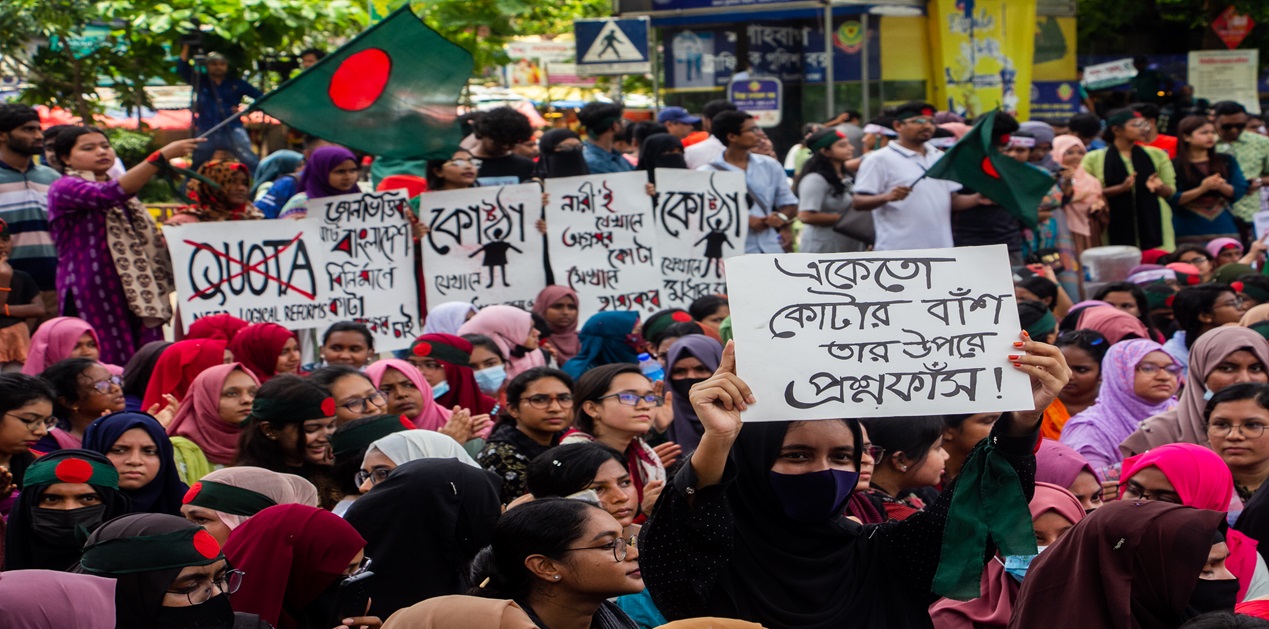
Relations between Bangladesh and India deteriorated sharply after former prime minister Sheikh Hasina was removed from power during a student-led mass uprising in August 2024 and subsequently took refuge in India. Many young leaders of the uprising openly criticised New Delhi for granting her shelter.
Tensions between the two countries continued even after the interim government led by Professor Muhammad Yunus assumed office. A combination of trade restrictions, suspension of visa services and diplomatic protests pushed bilateral relations to one of their coldest points in recent history.
Following the collapse of the Hasina government, several key communication channels between Dhaka and New Delhi effectively stalled. For a long period, the only consistent contact between the two countries was maintained through the offices of their respective national security advisers.
However, the political landscape changed after the general election held on 12 February, which brought the Bangladesh Nationalist Party (BNP) back to power. Since the formation of the new government led by Tarique Rahman, the administration of Indian Prime Minister Narendra Modi has signalled its willingness to move relations forward. Officials in Dhaka have also responded positively to these signals.
It was in this context that the DGFI chief’s visit to Delhi took place. During the trip, Major General Kaiser Rashid Chowdhury also met Parag Jain, head of India’s external intelligence agency Research and Analysis Wing (RAW), and Lieutenant General RS Raman, director general of India’s military intelligence, among others.
According to Indian media reports citing officials familiar with the discussions, the Bangladeshi and Indian intelligence chiefs reached an understanding that neither country would allow its territory to be used by individuals or groups to conduct activities harmful to the other’s interests. They also discussed the possibility of reactivating communication channels that had remained largely inactive for more than two years.
After the fall of Sheikh Hasina’s government, many security and diplomatic coordination mechanisms between the two countries had effectively been suspended. Until Tarique Rahman assumed office, most interactions had taken place only at the level of national security advisers.
Bangladesh’s former national security adviser Khalilur Rahman now serves as foreign minister in Tarique Rahman’s cabinet. During the tenure of the interim administration, he and India’s national security adviser Ajit Doval maintained limited communication between the two sides.
The Print reported that although the DGFI chief’s trip was officially described as a private medical visit, it carried broader strategic significance given New Delhi’s growing concern over developments in Bangladesh. India has been worried that political instability or escalating violence in Bangladesh could potentially affect security and stability in its north-eastern states.
Over the past several months, New Delhi has also indicated its interest in working with the BNP leadership under Tarique Rahman and restoring normal bilateral relations.
After the death of BNP chairperson and former prime minister Khaleda Zia, Indian Prime Minister Narendra Modi sent External Affairs Minister S Jaishankar to Dhaka. During a brief visit in December, Jaishankar met Tarique Rahman for nearly half an hour and handed over a condolence message from New Delhi.
The trip was limited to that meeting and did not include discussions with the interim government’s chief adviser.
Later, in February, India’s Lok Sabha Speaker Om Birla and Foreign Secretary Vikram Misri attended Tarique Rahman’s swearing-in ceremony. Observers viewed the move as another indication of India’s willingness to rebuild relations that had become strained during the interim administration led by Professor Muhammad Yunus.
Despite these developments, analysts note that several challenges still remain in Bangladesh–India relations. One of the most sensitive issues is the continued presence of Sheikh Hasina in India. She has been sentenced to death in Bangladesh in connection with crimes against humanity, and there have been increasing calls within the country for her extradition.
However, BNP secretary general and local government minister Mirza Fakhrul Islam Alamgir said in an interview with The Hindu that relations between Bangladesh and India should not be held hostage over the issue of Sheikh Hasina.
Several important bilateral agreements are also approaching critical points. One of them is the 1996 Ganges water-sharing treaty between Bangladesh and India, which is scheduled to expire in December this year. In addition, economic restrictions imposed by both countries over the past two years remain largely in place.
In a related development, India announced on Sunday that Faisal Karim Masud and Alamgir Hossain, the principal suspects in the killing of Inquilab Moncho leader Shaheed Sharif Osman Hadi, had been arrested by the West Bengal Special Task Force.
The killing of Osman Hadi, convener of the Inquilab Moncho, in December last year sparked widespread protests in Bangladesh, during which India also became a focus of public anger.
On 17 December, demonstrators under the banner of “July Unity” marched towards the Indian High Commission in Dhaka demanding the arrest and extradition of the prime suspects.
The arrest of the accused in India is now also being viewed by some observers as another possible sign of renewed cooperation between the two countries. Bangladesh is expected to pursue diplomatic efforts with India to secure the return of the suspects for trial.